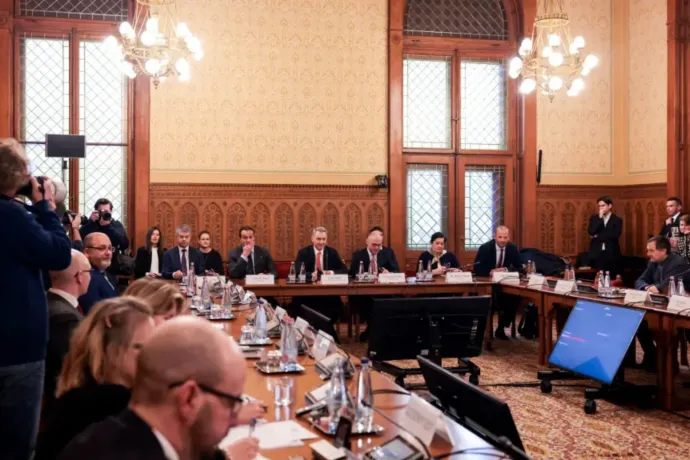
János Lázár, Hungary’s Minister of Construction and Transport, announced the update at a recent Economic Committee hearing. The Hungarian section of the Budapest-Belgrade Railway will open to traffic on February 20, 2026—if construction stays on track. Serbia has already put its Novi Sad-Subotica section into operation. Hungary has since accelerated all construction works for its part of the line.
Vietnam’s first privately-owned high-speed railway will be built in northern Vietnam
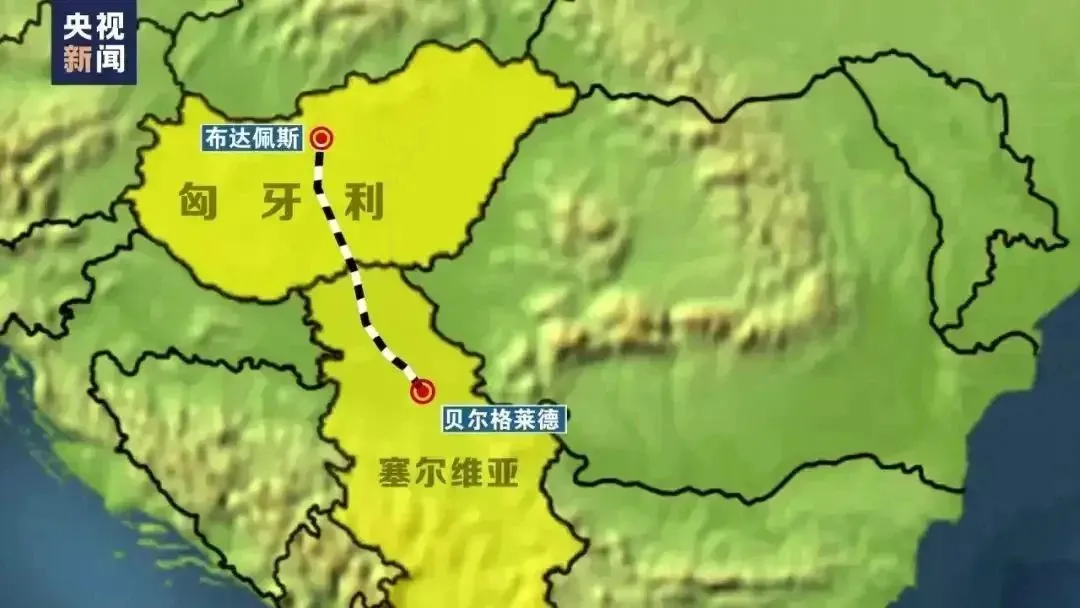
The railway links Belgrade (Serbia) and Budapest (Hungary), spanning 341.7 kilometers. Serbia’s 183.1-kilometer stretch has a designed speed of 200 km/h. Hungary’s 158.6-kilometer section is designed for 160 km/h. A consortium implements the Hungarian section. It includes China Railway No.9 Engineering Bureau Hungary, China Railway Electrification Bureau Hungary, and local Hungarian firms. This flagship China-CEEC cooperation project uses China’s homegrown railway technologies and equipment. It is the first to earn EU TSI certification.
Once fully operational, travel time between Belgrade and Budapest will drop from 8 hours to around 3. This will help Hungary and Serbia build regional transport and logistics hubs. It will also boost European infrastructure and economic growth along the route. Minister Lázár hailed the European Investment Bank’s (EIB) recent loan approval as a major win. The loan funds a railway infrastructure project worth nearly 800 billion Hungarian forints (about $2.45 billion). He named Budapest’s suburban railway (HÉV) a priority renovation. The Szentendre line will get full upgrades first—including trains, tracks, and station facilitie. For hubs like Budapest South Station, Lázár noted a key challenge. Hungarian State Railways (MÁV) cannot cover renovation costs alone in the next 20 years. Private investment is needed, aligning with international practices.
Lázár’s ministry employs 1,930 staff. With affiliated enterprises, it ranks as Hungary’s largest employer. The MÁV-Volán Group (rail and road passenger transport) alone has nearly 50,000 employees. Hungary’s public procurement efficiency ranked among the world’s top between 2015 and 2025, Lázár stated. Since public transport fare cuts, MÁV-Volán has seen steady growth in rail and bus passenger numbers. “Our long-term goal is cheaper, better services,” Lázár emphasized. He cited the station toilet renovation launched earlier this year. Now 75%-80% of passengers can use the upgraded facilities.